

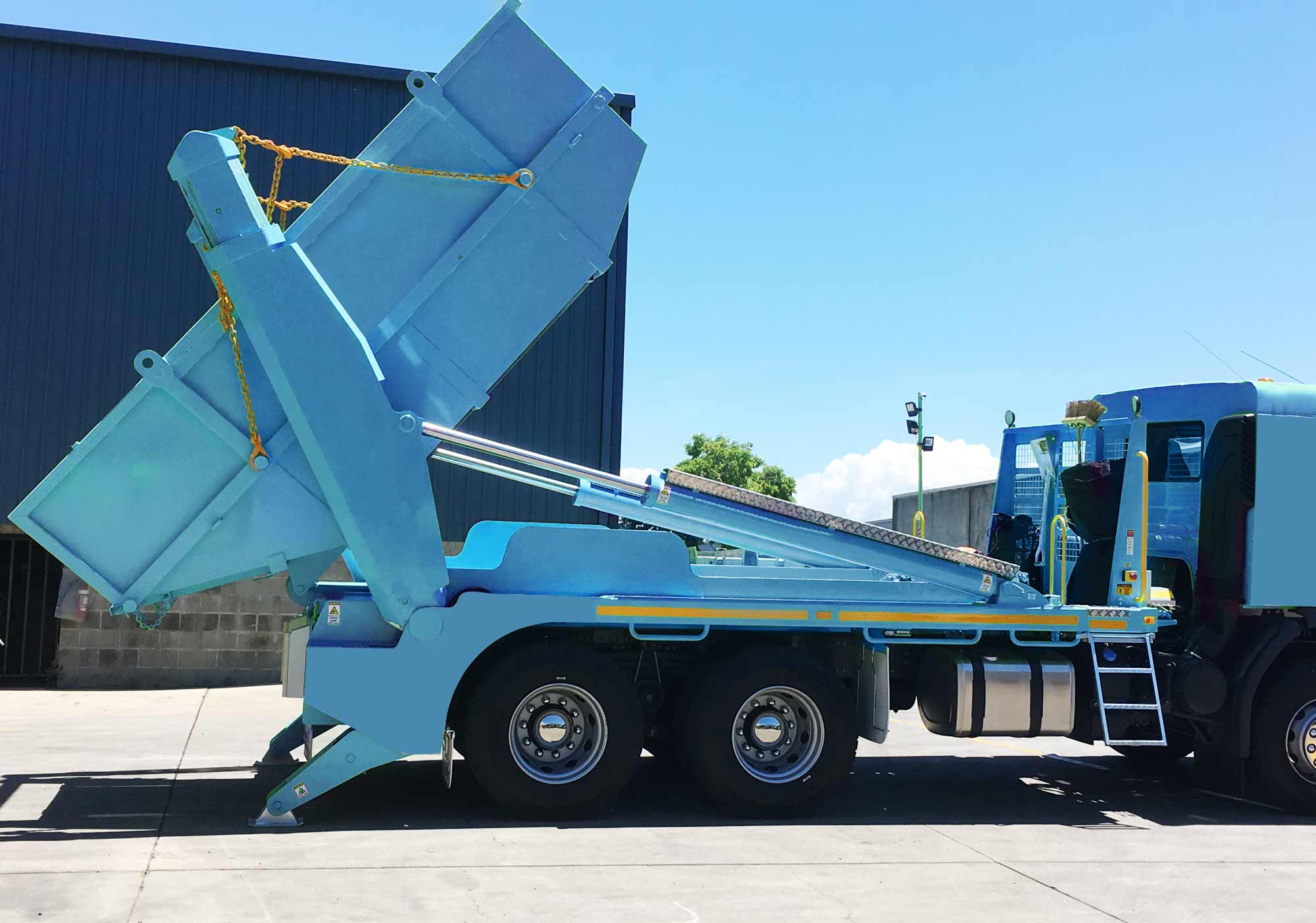
A scheduled service costs you a day, but an unplanned breakdown can cost you a week or more. The difference between the two usually comes down to how well you read your machine between service intervals. Knowing what to inspect across hydraulics, lift arms, stabilisers, and structural components, and recognising the operational signs that something isn’t right, is what keeps small issues from turning into costly repairs.
How Often Should a Skip Loader Be Serviced?
Skip loader maintenance is driven by operating hours, not calendar days. The interval varies depending on the model, the manufacturer’s recommendations, and how hard the machine is working. A loader running daily waste collection routes will reach its service threshold faster than one doing a handful of jobs a week.
Between scheduled services, a quick daily walkaround goes a long way. Check fluid levels, look for leaks, and grease the pivot points. Proper lubrication reduces friction between moving parts and prevents premature wear on components that are expensive to replace. It takes five minutes at the start of a shift, and it’s where operators most often catch problems early.
In addition, maintaining service records is essential for compliance. Under the Heavy Vehicle National Law, parties in the Chain of Responsibility have obligations around vehicle maintenance and record-keeping. Falling behind on servicing doesn’t just increase the risk of equipment failure; it also creates regulatory exposure.
What to Check Before Booking a Service
Experienced operators don’t rely solely on a maintenance schedule. They treat the service decision as condition-based, using a walkaround to assess the loader body’s critical components between intervals.
Hydraulic System
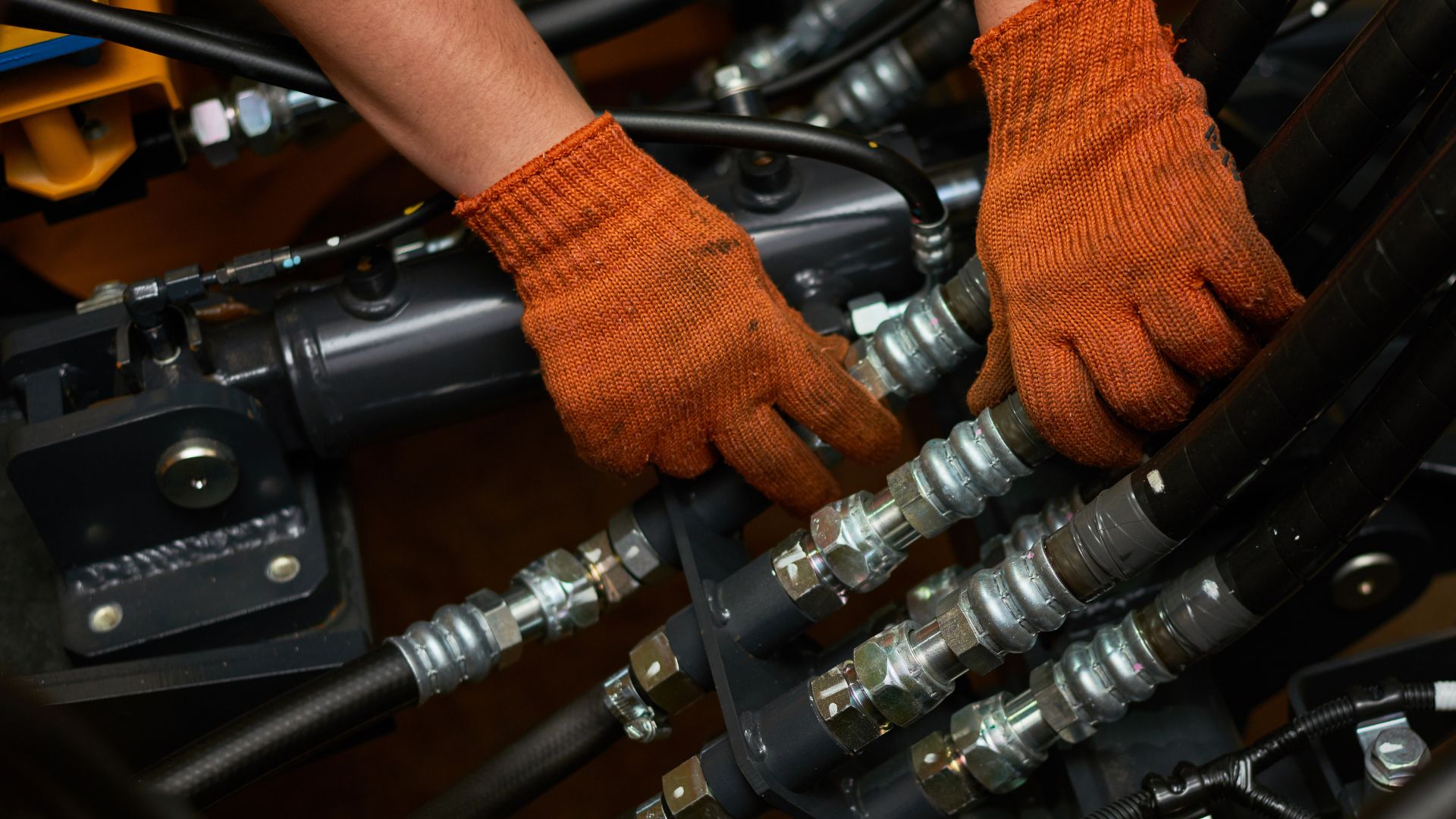
The hydraulic system carries the entire working load of a skip loader. Sluggish arm movement, visible leaks around hydraulic hoses and cylinder rods, discoloured fluid, or unusual noises during the lift cycle all point to issues that need attention. Even small weeps at hose fittings indicate seal wear and should be logged. Check fluid levels at the reservoir sight glass while you’re there. If the fluid looks dark or burnt, that’s contamination or overheating, and it’ll accelerate wear across the entire hydraulic circuit if it’s not addressed.
Lift Arms, Chains, Stabilisers, and Structural Components
The lift arms, tipping chains, stabilisers, and deck components all take heavy punishment during every cycle.
| Component | What to Check | What It Tells You |
| Lift arms | Extend fully and inspect pivot points and weld seams for cracks or deformation. Check pivot pins for play or wobble. | Cracks at pivot points indicate fatigue. Play at the pins means bush wear, which puts stress on the rest of the structure. |
| Tipping chains and hooks | Look for elongation, twisting, or cracking at the links. | Any sign of wear or deformation means the chain should be taken out of service and assessed by a competent person before it goes back on. |
| Stabiliser feet | Check foot pads for bending or cracking. Inspect hydraulic cylinder seals on the legs for weeping. Deploy fully and confirm they hold under load without creeping. | Instability when the stabilisers are deployed is a safety issue. The machine shouldn’t be operating. |
| Wear strips and bin guides | Look for deep gouges, cracks, or missing sections in the wear strips. Check guide rollers and pins for wear. | Damaged wear strips mean the deck is taking direct punishment. Worn guides cause bin misalignment, which loads up the lift arms unevenly. |
| Body-to-chassis mounting and frame | Check mounting bolts haven’t loosened. Look for cracking around cylinder attachment brackets and corrosion at chassis contact points. | Loose or cracked mounting points are a safety concern. Coastal operators will see corrosion here sooner than most. |
PTO and Hydraulic Pump
The power take-off (PTO) drives the hydraulic pump. If the PTO fails, the entire loader body is rendered inoperable. Listen for grinding or rattling on engagement, check the mounting hardware and coupling for movement, and inspect the hydraulic pump shaft seal for external leaks. Any hesitation between PTO engagement and hydraulic pressure build-up suggests wear that needs professional assessment.
Signs You’ll Notice During Operation
Some problems only show up when the machine is working. Watch for any of the following:
- Lift cycles taking noticeably longer than they used to
- Bins that used to pick cleanly now needing repositioning
- Controls feeling stiffer or spongier than normal
- The engine labouring harder than usual during hydraulic operation
- Hydraulic oil consumption increasing between checks
- Dashboard warning lights for engine temperature, oil pressure, or battery levels
If any of these show up mid-shift, don’t reset a warning light or push through to the end of the day. Bring the service forward.
What Happens When You Delay
Deferring a service doesn’t save money. It shifts the cost, usually upward. A worn hydraulic seal left unaddressed becomes a cylinder rebuild. A deteriorating tipping chain risks further damage to the arms and mounting points. Repair costs compound once one failure starts affecting adjacent components.
Beyond the repair bill, unplanned downtime pulls trucks off routes. For operators running one or two loaders, that’s direct revenue lost. For fleet managers, it disrupts scheduling across the operation.
There’s also a compliance dimension. Heavy vehicle inspections and Chain of Responsibility obligations mean a skip loader in poor condition creates regulatory risk on top of mechanical risk. Regular maintenance records and consistent servicing protect your operation on both fronts, and they protect the machine’s resale value when it’s time to move it on.
Book a Skip Loader Service
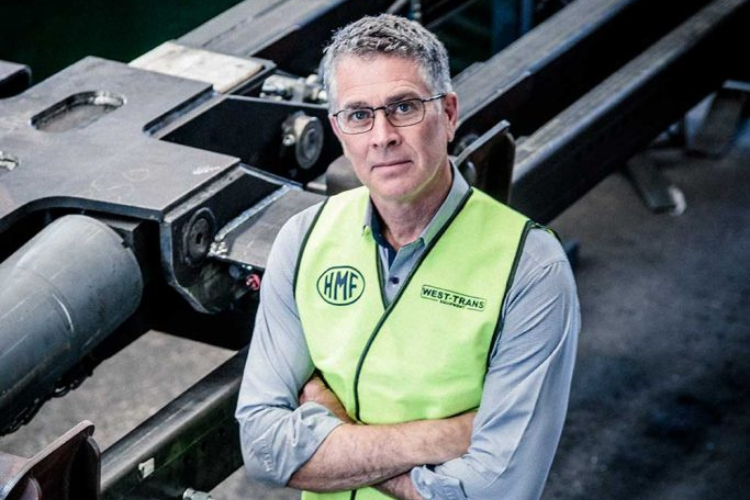
When your skip loader is showing signs it needs attention, or you want to get ahead of potential problems with a scheduled inspection, get in touch with the West-Trans service team. We’ve been providing servicing and maintenance alongside sales since 1988, with a network of authorised service partners across Australia.
Call 1300 877 411 or visit our Service and Parts page to find a service provider near you.