
You already know you need a tarp system. What’s less clear is which one actually suits your trucks, since the right choice usually comes down to what you’re carrying, how often you’re covering loads, and what’s already fitted across your fleet.
Between hydraulic, pneumatic and electronically operated options built for entirely different truck types, it’s easy to end up comparing products that were never built to do the same job.
Here’s what to weigh up, plus a comparison of the three systems West-Trans offers.
What to Consider Before Choosing a Tarp System
Material Type
Scrap steel and demolition waste will chew through lightweight tarp material fast. If that’s your regular load, tear-resistant, heavy-duty fabric isn’t optional. Sand, soil and general waste won’t tear a tarp up the same way, but the fabric still needs to hold up to constant flexing as it goes in and out all day.
Load Frequency
Think about how often you’re actually tarping. A truck doing it a handful of times a week doesn’t need the same setup as one doing a dozen loads a day. For high-frequency work, a hydraulically or electronically operated system earns its keep pretty quickly, since every cycle you save time on adds up. Occasional tarping doesn’t need that; a manual or basic hydraulic option is plenty.
Budget Tier
Manual and basic hydraulic systems cost less to buy. Pneumatic and fully hydraulic systems cost more, but they take labour and time off every load. Rather than comparing price tags, look at how much operator time each option will save you over a week or a month.
Compliance Requirement
Loads that could shift, spill or blow debris onto the road need to be properly restrained and covered under Heavy Vehicle National Law (this applies in most states and territories; WA and the NT run their own separate rules) and the load restraint standards from the National Heavy Vehicle Regulator.
Some state environmental regulators add their own requirements on top for waste and scrap loads specifically. If a tarp system is fiddly enough that operators start skipping steps, that’s a risk of fines and defect notices, not just an inconvenience.
Vehicle Type and Existing Fleet
Walking floor and tipping trailers need one kind of tarp system. Hook lift bins need another. Before you buy, check what’s already fitted across your fleet. Sticking to one tarp system type where you can makes servicing, spare parts and training a lot less complicated later on.
Comparing the Three Tarp System Types
West-Trans offers three West-Transcover tarping systems, each built for a different job.
| DoubleCover | HyCover | UnderCover | |
| Vehicle fit | Walking floor trailers, tipping trailers | Hook lifts, skip loaders, dog trailers | Hook lift bins |
| Power source | Hydraulic or manual | Pneumatic tower with electric in/out motor | Hydraulic |
| Load type | Bulk steel, bulk tipped loads | General waste, scrap and skip bin loads | Hook lift bin loads |
| Cost tier | Manual is the lower-cost option; hydraulic adds cost for less operator effort | Mid-range, fully powered system | Mid-range, fully powered system |
| Best suited for | Bulk steel and tipping trailer operators | Operators running hook lifts or skip loaders who want fast, low-effort covering | Hook lift operators wanting a stowed, low-maintenance system |
DoubleCover
The DoubleCover is built for walking floor and tipping trailers carrying bulk steel or bulk tipped loads. Its rollover design covers the load quickly, and tear-resistant netting holds up to the demands of bulk steel transport. It comes in both manual and hydraulic versions, so operators can choose based on how much time they want to save versus how much they want to spend upfront.
HyCover
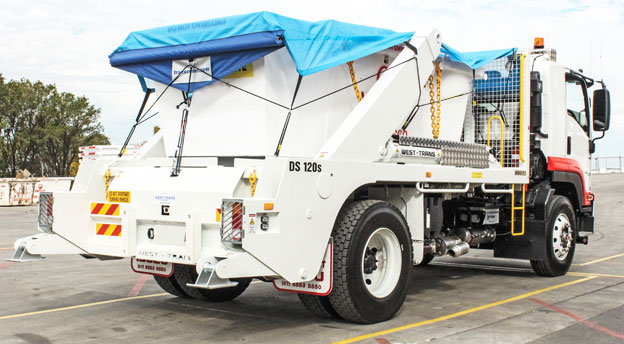
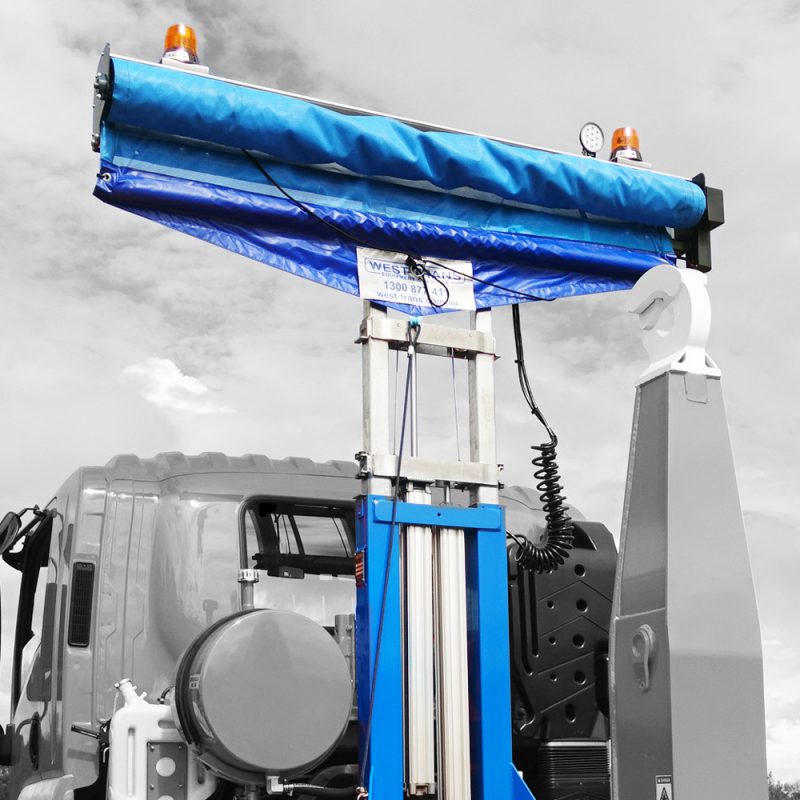
The HyCover is a pneumatically operated tarp cover designed for hook lifts, skip loaders and dog trailers. A pneumatic tower and electric in/out motor extend and retract the tarp, cutting down on the time operators spend manually covering loads throughout the day. It suits operations running frequent load cycles where speed and low operator effort matter most.
UnderCover
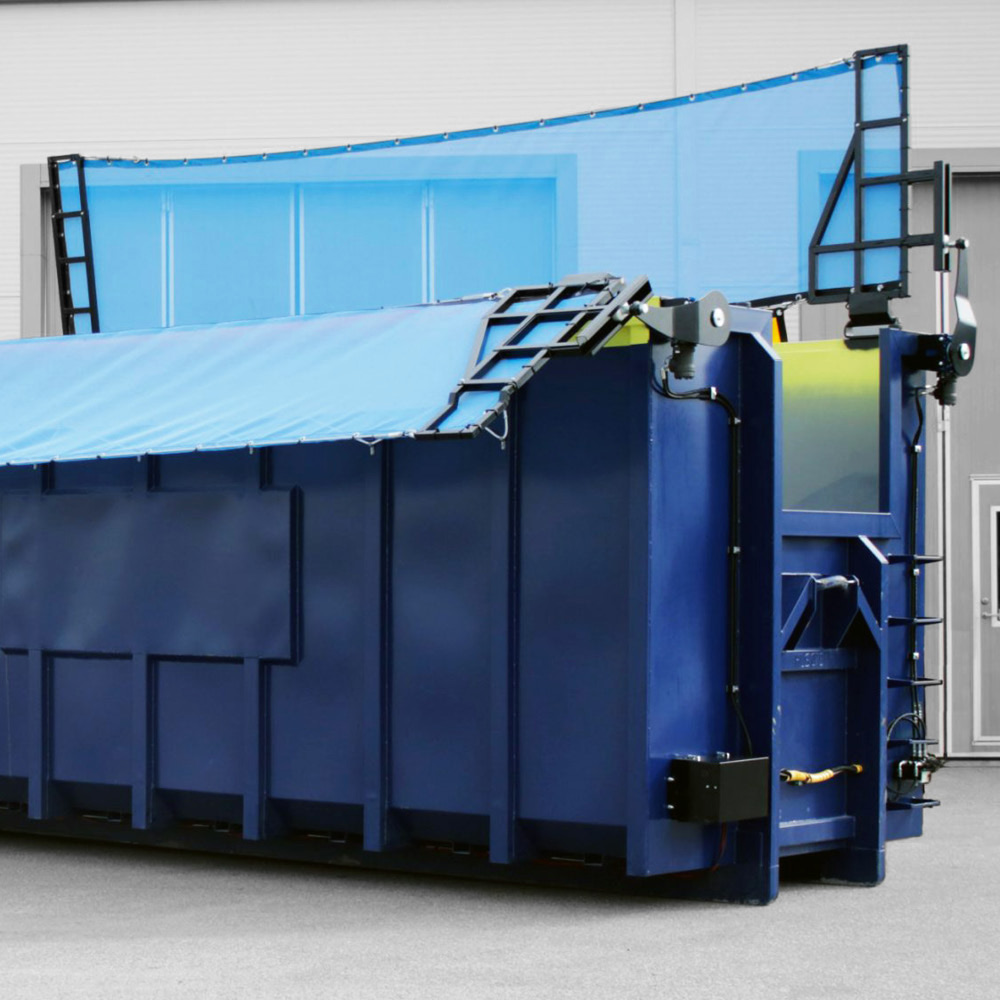
The UnderCover is purpose-built for hook lift bins. It’s fully hydraulic, with swing-over arms that roll the tarp to the rear and back to the front without the operator needing to guide it by hand. It stows underbody, keeping it out of the way when not in use, and its lighter build suits a range of hook lift sizes without adding unnecessary weight to the truck.
Tarp System Maintenance and Lifespan
How long a tarp system lasts depends on how it’s used and the conditions it works in. Systems running scrap steel loads, or operating in storm-prone regions like NSW and QLD, tend to show wear sooner than those on lighter, less frequent duty.
Tarp fabric and netting are usually the first parts to show their age, particularly where UV exposure, friction against loose or sharp loads, or repeated tension cycles are part of daily use. On hydraulically or electronically operated systems, the arms, motors and pivot points are next to watch, since they carry the mechanical load of every extend-and-retract cycle.
Weekly visual checks for fraying, sagging or corrosion, paired with scheduled professional servicing, catch most problems before they turn into breakdowns.
Making the Right Choice
Bulk steel and tipping trailer operators are best served by the DoubleCover, while hook lift and skip loader operators chasing speed and minimal operator effort will get more out of the HyCover. If you’re specifically running hook lift bins and want something lightweight and stowed out of the way, the UnderCover is purpose-built for that job.
West-Trans has been manufacturing equipment built for Australian conditions since 1994. Get in touch with our friendly team to talk through your fleet and find the right tarp system for your operation.
Frequently Asked Questions
What’s the difference between a hydraulic and pneumatic tarp system?
Hydraulic systems, like the DoubleCover and UnderCover, use hydraulic power to drive the covering arms. The HyCover uses an air-powered tower paired with an electric motor instead. In practice, pneumatic systems tend to run lighter and are built for the fast, repeated cycles of hook lift and skip loader work, while hydraulic systems suit heavier-duty tipping and bulk steel applications.
Can I retrofit a tarp system onto an existing skip loader?
In many cases, yes, though it depends on the model and configuration of your existing skip loader. Fitment varies enough between machines that it’s worth getting your specific setup assessed rather than assuming a system will bolt straight on. Get in touch with our team for advice on what will fit your fleet.
How long do tarp systems last?
There’s no single fixed lifespan. It depends on load type, frequency of use and operating conditions, and the tarp fabric itself usually wears out well before the mechanical components. Weekly checks and regular servicing are the biggest factors in extending that lifespan.
Should I choose a manual or automated tarp system?
Manual systems suit lower-frequency operations where upfront savings matter more than time saved per load. Hydraulically or electronically operated systems cost more but earn that back in reduced labour, particularly for trucks covering multiple loads a day where the operator time adds up quickly.