
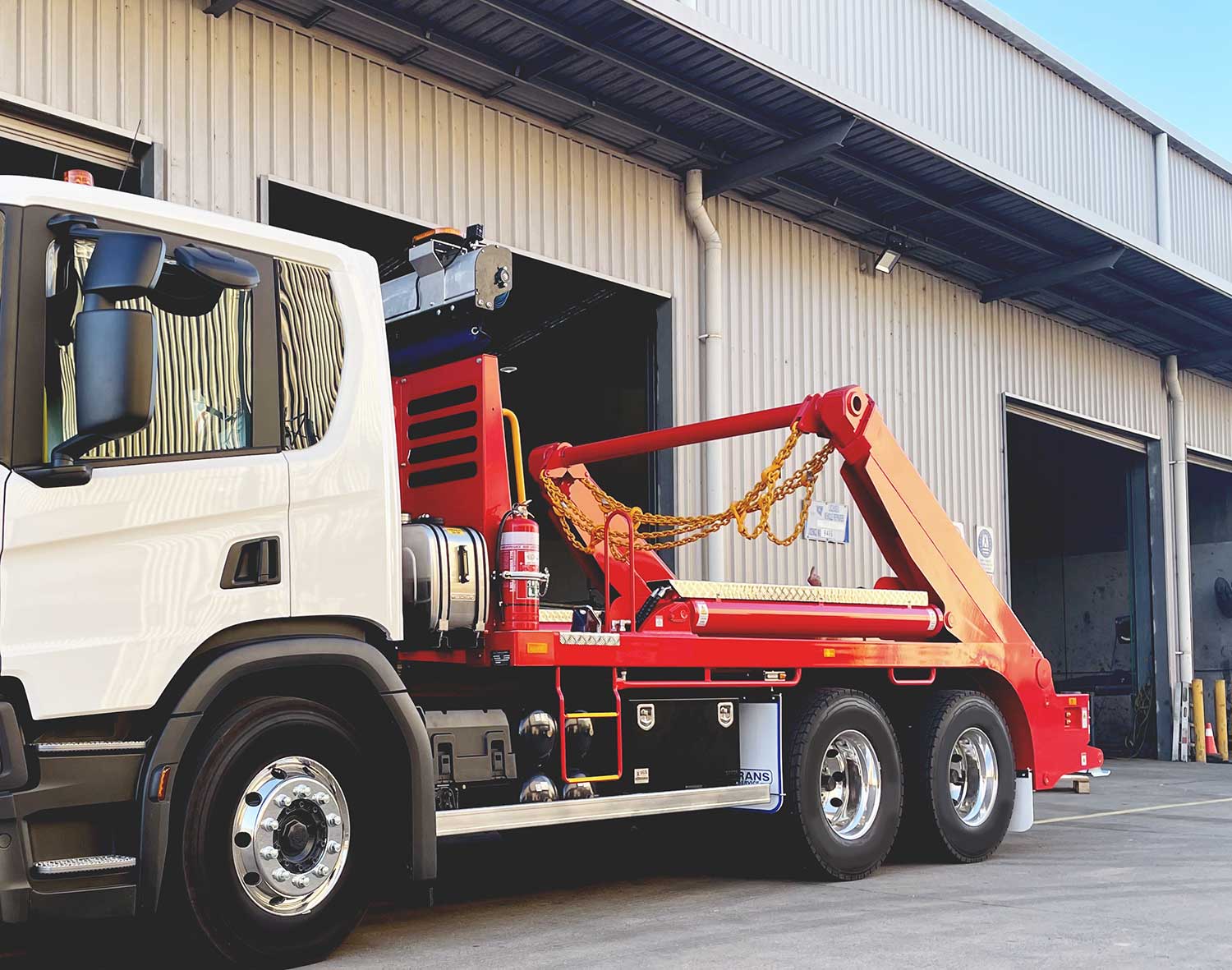
A skip loader will last 10 to 15 years with proper maintenance. That’s around 400,000 to 600,000 kilometres or 15,000 to 20,000 operating hours.
The exact lifespan ultimately depends on how the skip loader is used. A loader used for light suburban bin collection can run well past 15 years, whereas one working in heavy construction in harsh conditions might need replacing after 8 to 10 years.
Three components determine lifespan: the truck engine, the hydraulic system, and the loader body. They age at different rates, and whichever fails first decides when you need a replacement.
How Long Does a Skip Loader Last?
In Australia, how hard you work a skip loader matters more than how old it is.
The chassis, hydraulics, and loader body wear at different rates. An engine doing highway runs between jobs lasts longer than one grinding through constant stop-start in tight streets.
Hydraulics depend heavily on maintenance, and if you miss your fluid changes, cylinder failures can come years early. The loader body (particularly when made of high-tensile steel) often outlasts the truck it’s mounted on.
What Affects How Long a Skip Loader Lasts?
There are four main factors that determine the lifespan of a skip loader. But if you only pay attention to three and ignore one, you can cut years off your skip loader’s working life.
Operating Conditions

How many kilometres you cover matters less than the work itself. A loader doing 200 kilometres on regional highways wears completely differently from one doing 80 kilometres of stop-start in Melbourne’s CBD. Stop-start urban work destroys hydraulics faster.
Terrain wears things down, too. Hills, dirt roads, and corrugated surfaces are harder on the suspension, chassis, and hydraulics than smooth sealed roads.
It’s important not to exceed your capacity ratings. Whether you have a DS-80s rated for 8,000kg or a DS-120 rated for 12,000kg – those limits exist for a reason. Push past them regularly, and you’ll crack the chassis and burn out cylinders. That is years of life lost, not months.
Maintenance
Regular servicing isn’t optional if you want a 15-year lifespan. It keeps hydraulics running smoothly, catches wear early, and extends component life.
Hydraulics need particular attention. The fluid breaks down over time and loses its lubricating properties, leading to wear on cylinders and pumps. Regular fluid changes and filter replacements keep the system clean, so if you skip them, you’ll see slow lifts, leaking seals, and eventually require cylinder replacement.
The chassis and engine run on separate maintenance schedules from the loader. You can’t ignore engine servicing, transmission care, or chassis inspections and expect the loader to keep working. A loader is only as good as the truck underneath it.
Putting off repairs and small problems can lead to expensive ones. That minor hydraulic leak doesn’t stay minor. It worsens, damages other components, and turns into a major job. That is why it is best to fix issues while they’re still manageable.
Build Quality
The durability of a skip loader depends on the manufacturer’s reputation, which reflects engineering quality and long-term performance. West-Trans builds skip loaders using high-tensile steel or aluminium, designed for Australian conditions.
But materials are only part of it. Engine size relative to typical loads also affects longevity, as a truck that constantly works at maximum capacity wears out faster than one with power to spare. Hydraulic capacity works the same way, determining how well the loader handles its rated loads over thousands of cycles without degrading.
All of this rests on the chassis rating, which provides the foundation for everything else. A properly rated chassis with adequate strength remains structurally sound while weaker alternatives develop cracks under the same workload.
Environment
Coastal operations pose specific challenges for skip loaders, such as salt corrosion that affects the chassis, hydraulics, and body. Operators in Sydney, Newcastle, or Brisbane experience faster corrosion than those in inland areas. And while regular undercarriage washing and protective coatings help, salt still takes its toll over time.
Extreme heat in Northern Australia and WA creates its own set of problems. Hydraulic fluids don’t work as efficiently when temperatures reach the 40s; engines have to work harder, and everything wears faster. Summer heat stresses every system on the machine.
Dust and debris on construction sites also accelerate wear in ways you may not notice immediately. Dust works its way into hydraulic seals, damages cylinders, and grinds away at moving parts. If you’re operating in dusty conditions, regular cleaning and seal checks aren’t optional.
When Should You Replace a Skip Loader?
Knowing when to replace a skip loader isn’t always clear, but several signs indicate it’s time.
| Warning Sign | What It Means | What To Look For |
| Increasing Breakdowns | Multiple systems reaching the end of life | Regular failures rather than isolated issues; repair costs mounting |
| Hydraulic Failures | Worn cylinders, aging pumps, degraded seals | Slow lifts, persistent leaks, reduced capacity |
| Chassis Fatigue | Serious safety issues are developing | Stress fractures around the mounting points where the loader attaches |
| Engine Decline | Power loss and compliance issues | Reduced power, increased fuel consumption, trouble maintaining highway speeds when loaded |
The economic tipping point comes when annual repairs approach 25 to 30% of the replacement value. Keep detailed maintenance records so you can spot this trend developing, because at that point, replacement often makes more financial sense.
Remember that downtime costs more than just repair bills. Every day your loader sits in the workshop means uncollected bins, lost revenue, and potentially lost customers.
How to Extend Skip Loader Life
Whether you get 15 years from a skip loader depends on consistent maintenance, proper operation, and environmental protection.
Maintenance Schedule
| Frequency | What to Check | Why It Matters |
| Weekly | Hydraulic fluid levels, visual leak inspections, and tipping chain condition | Catches problems while they’re still small and manageable |
| Every 6-12 months | Full hydraulic inspection, chassis examination, component replacement (via dealer or West-Trans service centre) | Prevents major failures and extends system life |
| As needed | Lubricate pivot points, tipping chains, and hydraulic cylinder pins | Reduces friction and prevents premature wear |
| Daily | Pre-start checks of hoses, tipping chains, stabiliser legs | Takes minutes but prevents breakdowns that cost a day’s work |
Hydraulic fluid maintenance makes the biggest difference to system life. Clean fluid keeps cylinders, seals, and pumps working properly. Let it get contaminated or degraded, and you’ll see accelerated wear, slow lifts, leaking seals, and eventual cylinder replacement.
Pay particular attention to chassis mounting points where the loader attaches to the truck. These take the highest stress during every loading cycle and develop stress fractures first.
Replace wear items before they fail. A worn hydraulic hose that bursts under pressure can damage other components, but catching it during scheduled maintenance costs far less than emergency repairs. Keep detailed maintenance records to spot wear patterns and protect resale value.
Operator Technique
How operators handle equipment directly affects lifespan:
- Position bins correctly and avoid side loading
- Use smooth hydraulic controls (slamming to full extension or dropping loads rapidly creates shock loads)
- Stay within capacity ratings (every West-Trans skip loader has specific limits)
- Conduct daily pre-start visual inspections
Smooth, controlled movements reduce stress on cylinders and mounting points far more than most people realise.
Environmental Protection
- Coastal operations (Sydney, Newcastle, Brisbane): Wash undercarriages regularly to remove salt buildup before it causes corrosion.
- All environments: West-Trans loaders are abrasive blasted and primed with anti-corrosion primer base coat, finished with two coats of high gloss 2 pack colour. Maintain this protection by regularly cleaning and touch-up. Use covered parking when possible.
- Dusty conditions: Clean hydraulic components regularly, particularly around cylinder rods and seals. Dust works past seals and causes internal damage.
Should You Buy Equipment or Use Collection Services?
The choice between buying a skip loader and using professional collection services affects your economics over 10 to 15 years.
| Factor | Buying Your Own Equipment | Using Collection Services |
| Upfront Cost | Significant capital investment (truck chassis, loader, accessories) | No capital requirement – pay as you use |
| Operational Control | Complete control over scheduling and customer service | Limited to service provider’s availability |
| Ongoing Costs | Maintenance, repairs, insurance, registration, and eventual replacement | Bundled into service rates – more predictable budgeting |
| Risk | You carry depreciation, maintenance costs, breakdown risk | Service provider carries all equipment risk |
| Best For | Consistent daily collection needs, established operations | Project-based work, smaller operations, testing the market |
The transition from hiring to ownership typically occurs when your collection volume reaches a point at which ownership becomes more economical. That threshold varies, but most businesses make the switch once they have consistent daily collection requirements.
The choice between buying and hiring depends on your operation. When you’re ready to invest in your own equipment, West-Trans offers Australian-made skip loaders built for local conditions, backed by our dealer and service network.
Getting the Most from Your Investment
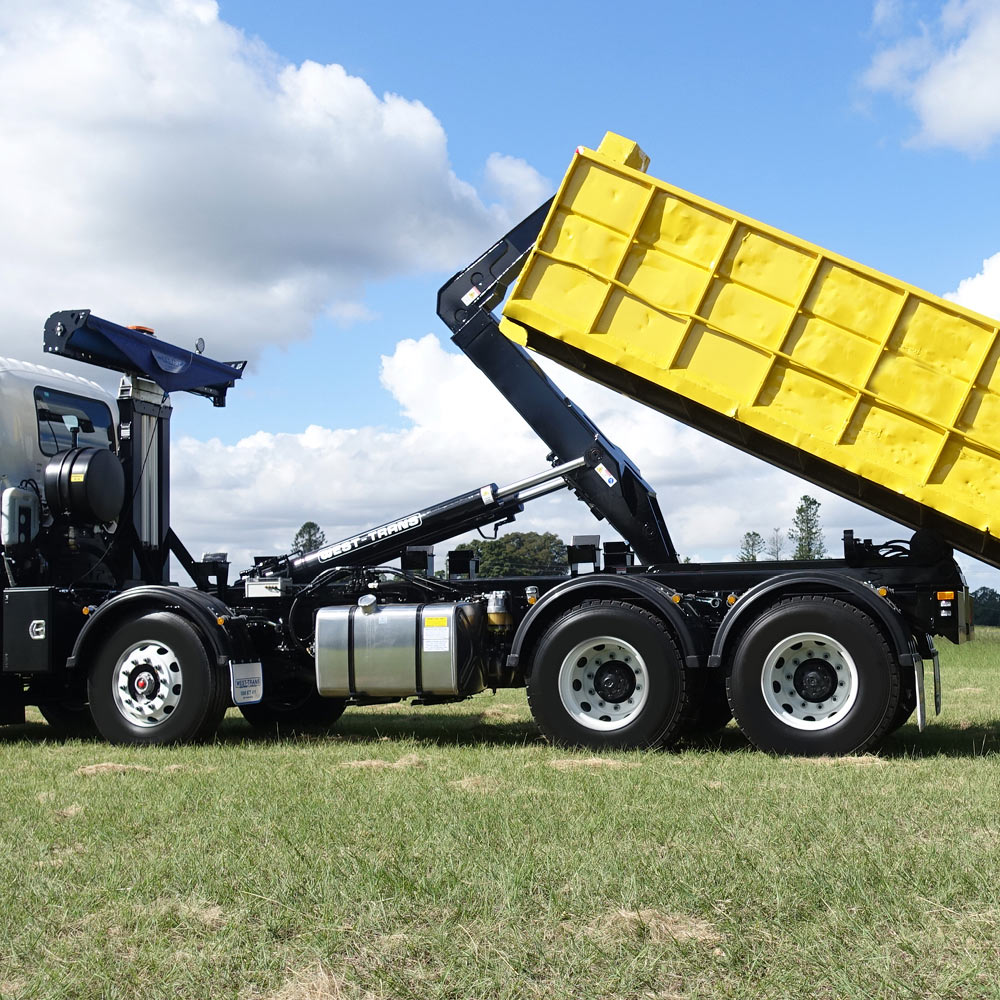
Maintenance and operating practices affect the lifespan of a skip loader more than anything else. The difference between 8 years and 15 years comes down to consistent servicing, operator training, and addressing problems early.
Australian conditions place demanding requirements on skip loaders. Coastal corrosion, extreme heat, and rough terrain all accelerate wear. Equipment built for these conditions, like West-Trans loaders, handles these challenges better than equipment designed for gentler climates.
Understanding your operation’s intensity also matters. Light suburban collection and heavy construction work produce dramatically different wear patterns, which help you set realistic expectations and budget appropriately for replacement.
When you’re ready to discuss skip loader options, get in touch with our friendly team. We understand the Australian waste collection market and can help you choose equipment that meets your needs and lasts. Call us or visit our website to explore our range of Australian-made skip loaders.